Dante Falconeri has always trusted his instincts, both as a cop and as a father. But this time, those instincts are leading him somewhere he never wanted to go. What started as a routine investigation into the shooting of Ross Cullum begins to unravel in the most unexpected way—not through evidence pointing to Jason Morgan, but through the subtle, unsettling behavior of his own son, Rocco. From the very beginning, something feels off, and Dante can’t shake the sense that the truth is closer to home than he’s ready to admit.
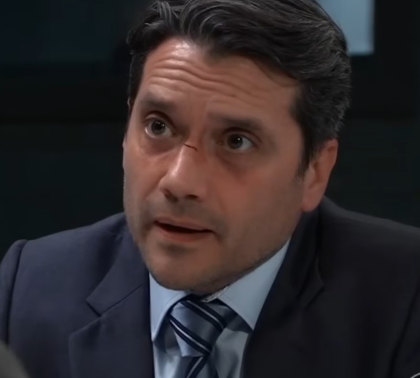
The first real crack in the story comes from something small but impossible to ignore—a wound on Rocco’s hand. It’s not serious, just a faint burn or abrasion, but to a trained eye like Dante’s, it stands out immediately. This isn’t the kind of injury a kid gets from playing around. It looks like recoil, like contact with something dangerous. Rocco brushes it off, avoids questions, but that only deepens Dante’s suspicion. Because now, this isn’t just about behavior—it’s about physical evidence.
As Dante watches more closely, Rocco’s emotional state becomes impossible to dismiss. The boy is anxious, withdrawn, and visibly shaken whenever the shooting is mentioned. He avoids eye contact, overreacts to simple questions, and carries a weight that no child should have to bear. For Dante, this is where the line between father and detective begins to blur. He wants to comfort his son, but his training tells him something else entirely—this is guilt. And guilt always leaves a trail.
Then comes the detail that changes everything. The forensic report confirms that Cullum was shot from behind. That single fact doesn’t align with what Dante knows about Jason Morgan. Jason is calculated, precise, and never shoots blindly. He confronts his targets head-on. A shot from behind suggests panic, fear, and inexperience—traits that don’t belong to Jason, but do fit someone else. Someone younger. Someone untrained. Someone like Rocco.
At that moment, all the pieces fall into place. The wound. The behavior. The angle of the shot. Dante doesn’t want to believe it, but the conclusion is unavoidable. Jason didn’t pull the trigger. Rocco did. And the realization hits harder than any case Dante has ever worked. Because this isn’t just a suspect—it’s his son.
The confrontation that follows is inevitable. Dante sits Rocco down, his voice steady but his heart racing. He doesn’t come at him like a cop. He comes as a father desperate for the truth. At first, Rocco denies everything, clinging to the lie he’s been forced to carry. But Dante doesn’t back down. He asks the one question that breaks through every defense: “Did you shoot him?” And in that moment, the silence says everything.
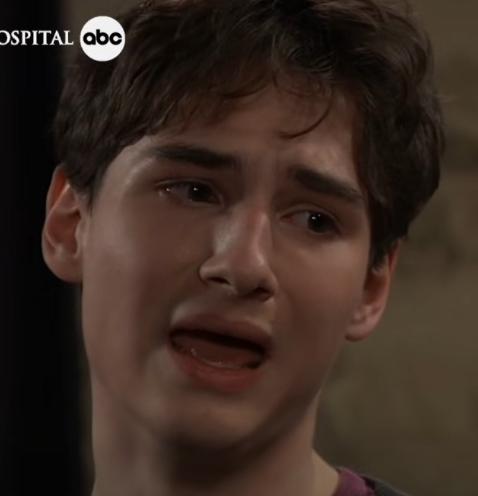
Rocco collapses under the weight of it all. The fear, the guilt, the pressure—it all comes pouring out. Through tears, he confesses that he pulled the trigger to save Jason and Britt. It wasn’t planned. It wasn’t calculated. It was a split-second decision driven by panic and desperation. But no matter the reason, the truth is now out—and it’s worse than anything Dante imagined.
What follows is not relief, but devastation. Dante is torn between two identities that cannot coexist in this moment. As a police officer, he knows what the law demands. As a father, he knows what his son needs. Telling the truth could destroy Rocco’s life. Hiding it could destroy his own sense of justice. There is no clean choice, no easy path forward. Only consequences.
Now Dante stands at a crossroads that will define everything that comes next. He could protect Rocco and let Jason continue to take the fall, sacrificing his integrity in the process. He could force a confession, hoping the truth and the circumstances will lead to leniency. He could investigate quietly, searching for a way to expose Cullum and reframe the shooting as self-defense. Or he could go even further, bending the rules and turning against the very system he once upheld.
Because in the end, this isn’t just about who shot Cullum. It’s about what happens when the truth comes at a cost too high to bear. And for Dante, the real question is no longer what is right—but who he’s willing to lose.