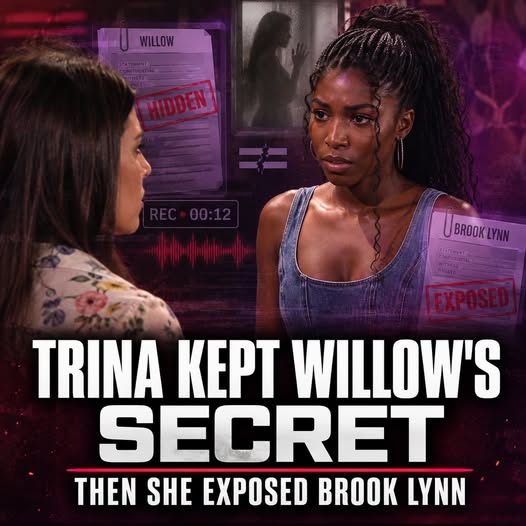
 Trina demanded Brook Lynn’s truth in a room full of people, but she did not apply that same rule when Willow admitted shooting Drew. The difference is not simply that one secret was older or more dangerous. It is whom Trina chose to protect, who absorbed the harm, and when silence suddenly became unacceptable. Put those choices beside each other and the double standard becomes hard to dismiss.
The current confrontation began with something real: Trina overheard Chase pressing Brook Lynn about Route 91, then connected the secret to Curtis and Jordan’s suffering. Her anger came from loyalty to her family. The problem is that loyalty also guided her earlier silence. When Willow’s confession threatened other people, Trina accepted secrecy rather than immediate public accountability.
Secret one protected Willow from a shooting consequence
Willow’s admission placed Trina inside a serious moral test. She knew who had fired at Drew, knew the information mattered to people searching for an answer, and still allowed that truth to remain contained. Trina may have believed she was protecting someone trapped in a destructive relationship, or buying time for a safer outcome. Whatever her motive, she decided that immediate disclosure was not the only honorable response.
That decision required Trina to live with uncertainty and collateral damage. Other people continued acting on incomplete information. Suspicions shifted. Relationships absorbed pressure. Trina did not create those harms, but her silence helped preserve the conditions in which they continued.
Brook Lynn faces public consequences after Trina speaks
Secret two threatened Trina’s own family
Brook Lynn’s Route 91 secret landed differently because Curtis and Jordan were at the center. Trina did not wait for Chase and Brook Lynn to finish privately. She did not ask whether Brook Lynn had caused the crash, merely witnessed it, or panicked afterward. She entered the gathering angry and demanded an answer while family members, friends, and colleagues watched.
The emotional difference is clear: this time Trina could see the hurt as an injury to her parents. That makes her reaction human, but it does not make the two standards consistent. Willow received privacy after a direct confession. Brook Lynn received public exposure while the cause of the crash was still disputed.
The protected person changed Trina’s threshold
In Willow’s case, Trina weighed compassion, danger, and circumstance before speaking. In Brook Lynn’s case, she treated concealment itself as enough to justify immediate confrontation. The threshold moved because Trina’s relationship to the injured people changed. She gave one woman context and denied the other even a private minute to explain.
That does not erase Brook Lynn’s choices. She hid her presence, joined Lucy in steering blame toward Willow, and concealed the truth from Chase. She should answer for those decisions. The fairness question is whether Trina believes every dangerous secret deserves instant disclosure, or only the secret that reaches her own family.
The consequences were also unequal
Silence protected Willow from immediate exposure. Speech placed Brook Lynn’s marriage, career relationship with Trina, bond with Gio, and standing inside the Quartermaine family in jeopardy at once. Trina chose the most public possible setting, making repair much harder even if the physical crash evidence later clears Brook Lynn of causing it.
A consistent standard would not require Trina to stay silent now. It would require her to admit that circumstances mattered when she protected Willow and must matter again before she condemns Brook Lynn. She can demand honesty while still allowing the facts to separate a cover-up from a collision.
The most powerful fallout is therefore not whether Trina was entitled to be angry. She was. It is whether she can recognize that her moral rule changed the moment the pain belonged to Curtis and Jordan. If she cannot, Brook Lynn may be guilty of lying while Trina becomes guilty of pretending her own silence was different.