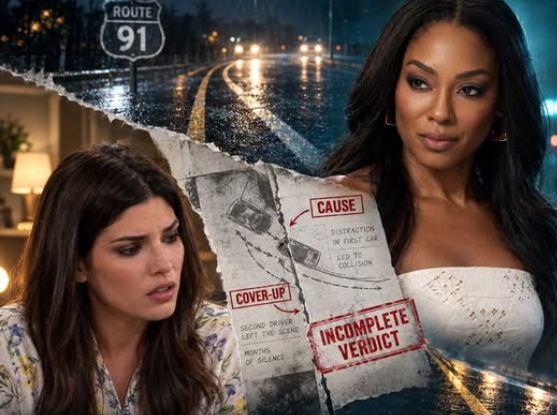
 Brook Lynn’s confession finally answered who was driving the second car on Route 91, but it did not answer the question that matters most: who actually caused Curtis and Jordan’s crash? The cleanest way to read the story now is as two separate columns of responsibility. Jordan owns the distraction inside the car that went off the road. Brook Lynn owns leaving, staying silent, and allowing that silence to shape everything that followed.
That split is the missing half Jordan can put into the open. The sequence begins with the collision, moves through Brook Lynn’s departure and the later discovery of what happened, then ends with months of choices made after both women knew more than the people around them. Once those beats are placed in order, physical causation and moral concealment stop looking like the same offense—and the family argument changes immediately.
Brook Lynn Confessed to the Second Car, Not to Causing the Crash
Brook Lynn admitted in front of the Quartermaines that she was the other driver. She said she struck the guardrail and believed the first car had continued in another direction because it was no longer visible. That explanation does not erase the decision to keep quiet after she learned Curtis and Jordan were the victims. It does, however, challenge the idea that being present in the second car automatically makes her the person who forced Jordan’s vehicle off course.
Tracy’s defense cut straight to that distinction. Brook Lynn’s silence did not cause Curtis to strike Isaiah, and it did not place the original distraction inside Jordan’s car. Trina’s answer was equally important: Brook Lynn watched the Ashford family tear itself apart and still did not speak. Both arguments can be true. One describes the mechanics of the crash; the other describes the damage produced by concealment.
Brook Lynn faces Trina and the Quartermaines after her confession
This is why the public confession did not create a simple innocent-or-guilty verdict. Brook Lynn can be cleared of causing the impact while remaining accountable for the months when Willow carried suspicion, Chase investigated the wrong story, and Trina’s family lived with consequences that never belonged to one person alone.
Jordan’s Private Truth Changes the First Column
Jordan has already acknowledged privately that her own distraction caused the crash. Until that fact enters the same public room as Brook Lynn’s confession, the people judging Route 91 are working with an incomplete record. Trina knows Brook Lynn left. Chase knows Brook Lynn concealed her role. Michael knows the family was managing suspicion. None of those facts substitutes for Jordan stating what happened inside her car at the decisive moment.
Jordan’s questioning of Michael after the confrontation makes her next move especially important. She wanted to know how long he had suspected Brook Lynn and whether his decision to support Jordan professionally was connected to guilt. Michael denied that motive and pointed to her ability. Yet the exchange showed Jordan testing not only the crash facts, but also the favors, alliances, and assumptions that grew around them.
A revelation from Jordan can therefore do more than defend Brook Lynn. It can separate the original cause from the later cover-up without excusing either one. That is the first column of the responsibility map: distraction, loss of control, and collision. The second column begins after the cars separate: departure, discovery, silence, framing, and the family decisions built on a false picture.
The Lie After Route 91 Created Its Own Victims
Brook Lynn’s strongest explanation was fear. She had consumed wine and believed calling the police could cost her Phoebe. That fear explains why she froze, but it also reveals why the concealment became larger than the crash. Each attempt to protect her family transferred risk to someone else. Willow became easier to suspect. Chase used his badge and trust inside a version of events his own wife knew was incomplete. Trina saw loyalty operating as a shield for the Quartermaines while her family absorbed the fallout.
Chase confronts Brook Lynn after learning the Route 91 secret
That chain explains why Chase’s walkout and Gio’s rejection landed so hard. They were not reacting only to one night on the road. They were reacting to the way a secret recruited them into protecting it without their consent. The confession ends Brook Lynn’s control over that story, but Jordan’s truth will decide whether the family keeps assigning the original impact to the wrong person.
The Route 91 Verdict Needs Two Forms of Accountability
The sharper verdict is not that Jordan’s role makes Brook Lynn blameless, or that Brook Lynn’s silence makes Jordan’s distraction irrelevant. The crash needs two forms of accountability. Jordan must name the action that caused the collision. Brook Lynn must face the consequences of leaving and then allowing a false narrative to harden around Willow, Chase, and the Ashfords.
That distinction also gives Trina something more useful than another family defense. It gives her a complete record. Her anger at Brook Lynn’s silence remains justified even if Jordan changes the answer to who caused Route 91. The pain came from both columns: the accident that injured her parents and the concealment that let the wrong people carry the blame.
The next revelation can finally put those columns side by side. When Jordan tells the public version of what happened inside her car, Brook Lynn’s confession will no longer be mistaken for the crash verdict. It will become what it truly is: one guilty half of a story that has always required two.