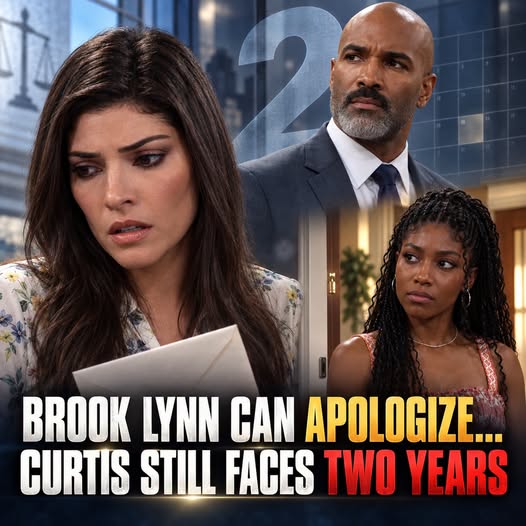
The damage falls into four separate columns: what happened on Route 91, what Brook Lynn concealed afterward, what Curtis chose to do to Isaiah, and what the family can still repair. Mixing those columns makes Brook Lynn responsible for too much while letting Curtis own too little. Separating them shows exactly why the apology is necessary and why it cannot be treated as a magic exit.
First: the crash truth changes the record, not every consequence
Brook Lynn’s account supports what Jordan and Curtis said about the other vehicle on Route 91. That matters because it closes the central factual gap: another driver was present, and Brook Lynn says she never realized the Ashfords’ car had gone off the road. Justine can use that account to file the necessary paperwork and correct the official story.
But correcting the crash record does not cancel everything that happened later. The legal system will not pretend Curtis never аttаckеd Isaiah simply because the belief behind his anger was incomplete. That is the first hard limit of Brook Lynn’s confession. It can establish what she knew and when she knew it, but it cannot transfer Curtis’s action back onto her.
Second: silence created time for a false target to harden
Brook Lynn’s responsibility begins after the night itself. Once she understood that Jordan and Curtis had crashed and that people were searching for the other driver, she chose self-protection. Her fear of losing Phoebe helps explain that decision. It does not make the decision harmless.
Every day without the truth gave the wrong explanation more weight. Curtis believed Isaiah was responsible. Trina watched her family absorb the damage. Chase investigated while the answer lived inside his own marriage. The Route 91 blame map already separated the crash from the concealment; Justine’s two-year estimate now shows how that distinction affects the next chapter.
Third: Curtis still owns the аttаck on Isaiah
Justine was careful not to say Brook Lynn directly caused the fight. Curtis made the choice to strike Isaiah. Portia has defended that boundary, and Trina knows her father is responsible for his own behavior even while she believes the pain could have been avoided. This is not a contradiction. It is the uncomfortable center of the story.
Curtis can be both a man misled by missing information and a man accountable for what he did with his anger. Brook Lynn can be both frightened about her child and wrong to hide what she knew. Trina can be both furious with Brook Lynn and honest about Curtis’s agency. The story becomes weaker when one person must be innocent for another person to be guilty.
Fourth: the apology can still change the relational sentence
Brook Lynn cannot promise that Curtis will avoid prison, and she cannot give Trina the months of certainty her family lost. What she can change is the next decision. She can stop asking relatives to manage the truth, answer Trina’s questions without defending every motive, and accept that forgiveness may not arrive on her timetable.
That is why leaving the Quartermaine estate to see Trina matters. Tracy wanted to stop her, likely believing an emotional confrontation could create more legal trouble. Brook Lynn went anyway because the moral debt could not wait for a perfectly controlled strategy. Ned supported that choice. The visit becomes meaningful only if Brook Lynn listens after she says she is sorry.
Trina’s response can also shape what happens beyond the legal case. She has pulled away from her music plans because they now feel tied to Brook Lynn’s guilt and support. Brook Lynn cannot demand that she return, but she can make clear that Trina’s talent was never a consolation prize. Their earlier conflict over whether anger would cost Trina her music future now has a more painful answer: repair must protect Trina’s agency, not pressure her to make Brook Lynn feel forgiven.
General Hospital cast promotional image
The honest apology does not ask to be acquitted
Brook Lynn’s strongest next move is not proving that she never wanted anyone hurt. The people around her already understand fear, guilt and family pressure. What they need is a confession that does not turn explanation into erasure. She can name what belonged to her: the silence, the delay and the trust that delay destroyed.
She should also name what did not belong to her. Curtis’s аttаck cannot be loaded onto her conscience simply because it followed her concealment. A sincere apology can acknowledge that the truth might have changed his path without claiming she controlled his fist. That precision is not evasion; it is the beginning of accountability for everyone.
The two-year threat makes the scene feel irreversible, but the story is not finished. Legal consequences may remain. Chase may not come home quickly. Trina may reject the apology. Still, Brook Lynn can choose whether the Route 91 secret ends as another Quartermaine cover-up or becomes the moment she finally stops letting protection speak for her. She cannot return lost time. She can decide what the truth does next.