For months, fans of General Hospital felt that something was off about Nathan’s miraculous return, but the reveal that he is actually Cassius Faison has taken that suspicion to an entirely new level. What initially seemed like a classic soap resurrection has now transformed into a far more unsettling narrative about identity, deception, and legacy. The biggest twist is not that Nathan isn’t Nathan, but that this revelation may have been hiding in plain sight all along, carefully constructed through clues that many viewers noticed but did not fully connect.
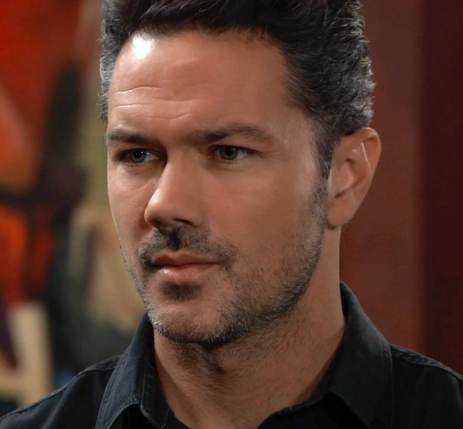
The most compelling foundation for the twin theory lies in the DNA confirmation that convinced everyone in Port Charles to accept “Nathan” as genuine. At the time, this scientific validation shut down skepticism, but in hindsight, it may have been the most obvious clue. Identical twins share nearly identical DNA, meaning the test didn’t truly prove his identity, only his biological connection. What once reassured characters and viewers alike has now become the very detail that undermines everything. In this light, the DNA result was not proof of truth, but a cleverly disguised misdirection.
Another critical clue came from Britt Westbourne, whose seemingly casual remark about Cesar Faison having four children now carries enormous weight. At the time, many fans dismissed it as a minor inconsistency or throwaway line, but it now appears to have been deliberate foreshadowing. With Britt, Nathan, and Peter August already established, the existence of a fourth child opens the door for Cassius. This suggests that the writers planted the truth early, trusting that viewers would either overlook it or underestimate its importance.
Beyond the technical clues, it was Nathan’s behavior that truly raised red flags. Longtime fans immediately sensed that something fundamental had changed. The man who returned lacked the emotional depth and loyalty that defined Nathan, particularly in his relationship with Maxie. Instead of rushing to her side or fighting to rebuild their bond, he appeared detached, almost indifferent. His growing connection with Lulu only intensified suspicions, as many viewers believed the real Nathan would never have crossed that line. This wasn’t just character evolution; it felt like an entirely different person operating under a familiar face.
Maxie’s role in this storyline has become one of the most powerful emotional indicators of the truth. While science and logic pointed one way, the emotional reality told another story. Nathan’s love for Maxie was once portrayed as unwavering, making his lack of urgency and passion impossible to ignore. In many ways, Maxie herself became the unspoken test that “Nathan” failed. Her inability to fully reconnect with him, and her ultimate decision to move forward with her life, now reads less like a romantic choice and more like an instinctive recognition that something wasn’t right.
The twin theory also fits neatly within the long-standing storytelling traditions of General Hospital, where hidden siblings and secret identities are recurring themes. From past storylines involving twins and memory manipulation, the show has repeatedly explored the idea that identity is not as fixed as it seems. Cassius Faison, as a potential long-lost twin raised under entirely different circumstances, represents a natural extension of that pattern. However, while the trope is familiar, its execution here feels more layered due to the psychological and emotional inconsistencies that accompanied Nathan’s return.
At the same time, this theory has sparked significant debate among fans. While many accept the twin explanation as the most logical, others criticize it as predictable or overused. Comments about “too many twins” and “lazy writing” reflect a growing frustration with recycled narrative devices. Yet even those criticisms highlight something important: the storyline has captured attention. Whether fans love or hate the direction, they are deeply engaged, analyzing every detail and questioning every motive.
What makes this twist particularly compelling is the possibility that the twin reveal is only the beginning. If Cassius is indeed Nathan’s brother, questions immediately follow. Why was he hidden? Who raised him? And most importantly, why has he appeared now? These unanswered questions suggest that Cassius may not simply be a replacement, but part of a larger plan connected to Faison’s legacy. His presence in Port Charles could be strategic, positioning him not just as a character, but as a catalyst for future conflict.
In the end, the revelation that Nathan may have a twin reframes everything viewers thought they understood. It transforms a resurrection story into a mystery about identity and intent, forcing fans to reconsider every scene, every interaction, and every emotional beat. If this truly is a twin storyline, it is one built on subtle clues and long-term setup. But if there is more beneath the surface, then this shocking reveal may only be the first step in a much darker and more complex narrative that is still unfolding.