Isaiah wasn’t just late. That’s the detail many viewers are brushing past, but it may be the most important clue in this entire storyline. He was called for a discreet, urgent house visit to treat Rocco’s worsening condition, and everything pointed to him arriving quickly. Instead, he never showed up. Lulu was suddenly forced to rush Rocco to the hospital herself. In a show like General Hospital, characters don’t simply “fail to arrive” without a reason. This wasn’t a delay. It was an interruption—and the only interruption that fits the timeline is the crash.
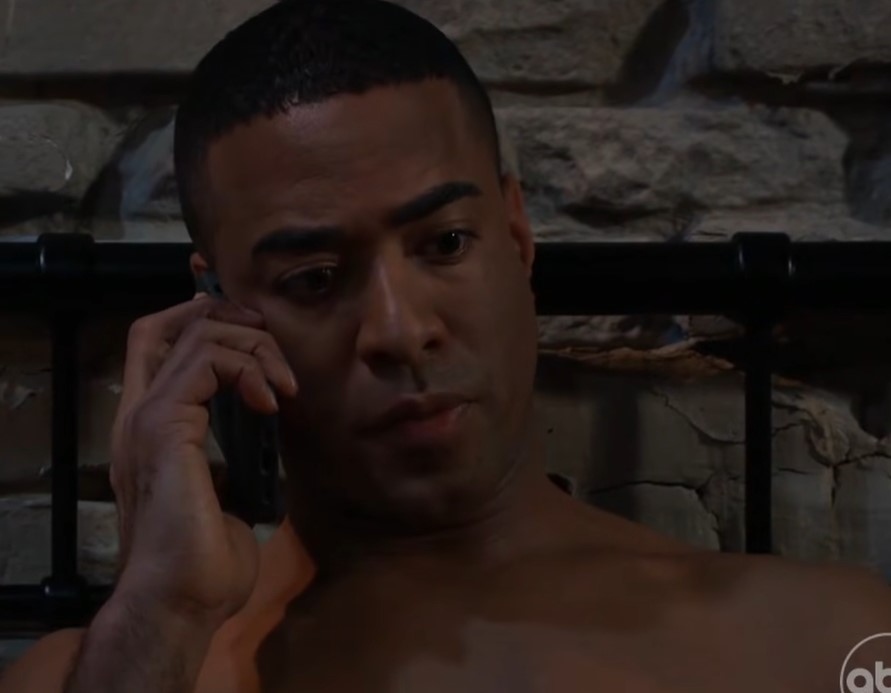
The accident itself feels less like a random event and more like a carefully planted trigger. Jordan and Curtis were visibly distracted, caught up in a moment that took their eyes off the road at the worst possible time. From a real-world perspective, that’s enough to assign blame. But soap logic doesn’t follow fairness—it follows impact. And that’s where the theory becomes darker. The ones who made the mistake may not be the ones who pay the ultimate price. Instead, Isaiah may have been in the wrong place at the exact wrong moment, becoming collateral damage in a chain reaction he never saw coming.
What makes this theory even more compelling is the unmistakable “death flag” surrounding Isaiah. Rumors of an actor exit have been circulating, and historically, GH handles these departures with dramatic, emotional storylines—often involving tragedy. A sudden car crash, a failed arrival, a shift to hospital chaos—these are all classic signals. The show has set the stage not just for injury, but for a potential loss that reshapes multiple storylines at once. Isaiah wasn’t positioned as a central hero, but that’s exactly why his death would hit harder—unexpected, unfair, and deeply disruptive.
But the true shock may not be the crash itself. It may be what Isaiah takes with him if he dies. There’s growing fan speculation that his connection to Portia runs deeper than what’s been revealed. The timeline of her pregnancy, the control over information, and the emotional undercurrents all suggest a hidden truth: Isaiah could be the real father of her baby. If that’s true, then his death wouldn’t just be tragic—it would bury a secret that was never meant to stay hidden. And in classic GH fashion, that secret wouldn’t stay buried forever.
The fallout from this would be explosive. Portia would be left not only grieving, but consumed by guilt—guilt for what she didn’t say, for what Isaiah never got to know, and for the truth she may have tried to control. That emotional pressure could push her into blaming Jordan, especially if Jordan’s distraction is seen as the cause of the crash. Suddenly, what began as a momentary lapse turns into a life-altering catastrophe, one that fractures relationships and reignites old tensions.
Jordan, in particular, would face a devastating shift in perception. As a former law enforcement figure, she represents control, discipline, and responsibility. A crash caused by distraction undermines all of that. Even if she survives physically, the emotional and legal consequences could dismantle her standing, forcing her into a storyline driven by guilt, scrutiny, and loss. And Curtis, caught between grief and blame, could find himself pulled back toward Portia, not out of love alone, but out of shared trauma.
At the same time, the hospital becomes the center of converging crises. Isaiah’s condition—whether critical or fatal—would dominate the emotional core, while Rocco’s worsening infection adds urgency and chaos. Multiple lives hanging in the balance, secrets on the verge of exposure, and families colliding in one space—this is the kind of layered tension GH thrives on. It’s not just about who survives, but about what truths emerge when everything starts to fall apart.
Ultimately, this theory reframes the accident as something far more deliberate than it first appeared. It’s not just a crash—it’s a catalyst. A missed arrival becomes a fatal turning point. A small moment of distraction spirals into irreversible consequences. And if Isaiah truly dies, then this isn’t just another dramatic beat—it’s the beginning of a much darker arc where guilt, secrets, and loss reshape the future of everyone involved.