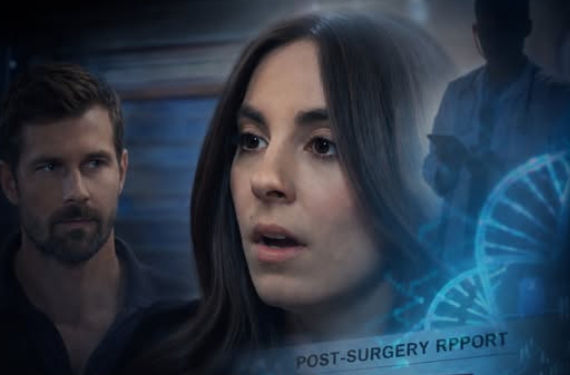
 Molly walked into that follow-up appointment expecting closure, not a turning point. After everything she had been through—the diagnosis, the pain, the surgery—this visit was supposed to be simple. A routine check. A confirmation that she was healing. Nothing more. She had already braced herself for a future that looked smaller than the one she once imagined. But what if this wasn’t just a checkup? What if this was the moment everything shifted?
For months, Molly’s story has been defined by loss—not just physical pain, but the quiet, devastating realization that her future as a mother might never happen. Endometriosis didn’t just disrupt her life; it forced her to confront a version of her future she never chose. The kind where hope is slowly replaced by acceptance. The kind where “maybe someday” turns into “probably never.” And that’s exactly why this moment matters—because Molly wasn’t walking in with hope. She was walking in with resignation.
The tension in that room wasn’t loud, but it was suffocating. Molly didn’t need dramatic music or a shocking reveal to feel the weight of what was coming. Every second of waiting, every glance exchanged, carried the same unspoken fear: what if nothing has changed? Cody stood by her side, supportive but powerless, knowing that whatever came next would either confirm her worst fears—or force them to evolve into something even harder to process.
And then came the shift. Not a miracle. Not a promise. But something far more dangerous—possibility. The kind of language doctors use when they’re careful, measured, but quietly optimistic. Words like “better than expected.” Phrases like “positive signs.” The suggestion that things might not be as final as they once seemed. It wasn’t a guarantee. It wasn’t certainty. But it was enough to crack open a door Molly had already closed in her mind.
That’s what made it a shock. Because Molly wasn’t prepared for good news. She had already processed the grief. She had already started building a life around limitations. Hope, in that moment, didn’t feel comforting—it felt overwhelming. Because hope means risk. It means letting yourself believe again. And for Molly, that might be the hardest thing of all. When you’ve already accepted loss, the idea of gaining something back can be just as terrifying as losing it in the first place.
And this is where the writing starts to feel intentional. This isn’t just a medical update—it’s a narrative reset. The surgery, the timing, the immediate follow-up with a doctor’s report… none of it feels random. It feels like groundwork. Like the show is carefully repositioning Molly for something bigger. Because in daytime drama, “a chance” is never just a line of dialogue. It’s a setup. A signal. A warning that something is coming.
Fans are already divided on what that “something” could be. Some see this as the beginning of a second chance—a slow, emotional journey toward the possibility Molly thought she lost forever. Others are more cautious, even skeptical, worried that the show might rush into a “miracle pregnancy” that undermines the reality of her condition. And that tension between hope and realism is exactly what makes this storyline so compelling right now. No one knows which direction it will go—but everyone can feel that it’s building toward something.
Because if Molly truly has a chance—even a small one—it changes everything. It pulls Cody deeper into her world. It raises new questions about what she’s willing to risk, physically and emotionally. It opens the door to difficult choices, complicated treatments, and the kind of emotional stakes that don’t resolve easily. This isn’t a happy ending. It’s a new beginning—and possibly a more dangerous one than before.
So was this just good news… or was it the first sign of something much bigger? And if Molly finally has a chance at the future she thought she lost… what will she be willing to risk to make it real?